No Florida State Income Tax
Florida has no personal state income tax. This applies to wages, retirement income, Social Security benefits, pension distributions, investment income, and capital gains. Every category of personal income is exempt from Florida state taxation.
For retirees moving from high-tax states like New York, New Jersey, California, or Connecticut, this is often the single biggest financial advantage of Florida residency. Depending on your income level and home-state tax rates, the annual benefit can range from several thousand to tens of thousands of dollars. Federal income tax obligations stay unchanged regardless of Florida residency.
Florida Estate Tax
Florida eliminated its state estate tax in 2004. There is no Florida state estate tax or inheritance tax. Beneficiaries receiving assets from a Florida decedent's estate will not owe state-level estate or inheritance taxes. Federal estate tax rules continue to apply at applicable thresholds. Consult an estate planning attorney for your specific situation.
Homestead Exemption
Homeowners who use a property as their primary Florida residence on January 1 of the tax year qualify for the homestead exemption. It is one of the most valuable property tax benefits in Florida. The exemption reduces the property's assessed value by up to $50,000:
- The first $25,000 of exemption applies to all property taxes (county, city, school board, and special districts)
- The second $25,000 applies only to non-school levies (not the school board portion of your tax bill)
To receive the homestead exemption, apply through the St. Lucie County Property Appraiser's office. The application deadline is March 1 of the tax year you want the benefit. If you close on a home in October and want the exemption for the following January 1 assessment, apply by the following March 1. Applications can be submitted online through the Property Appraiser's website.
Save Our Homes Assessment Cap
Once a homestead exemption is in place, Florida's Save Our Homes (SOH) law limits annual increases in a property's assessed value to 3% or the change in the Consumer Price Index (CPI), whichever is lower. In years of low inflation or deflation, the cap can be even tighter.
This protection is powerful. In a rising real estate market, the gap between market value and assessed value can widen over time. Long-term homeowners end up paying taxes on an assessed value well below what their home is worth on the open market.
Important for buyers: The SOH cap resets when a property changes hands. After a sale, the new owner's assessed value resets toward market value and is taxed accordingly. If you are buying a home owned by a long-term resident who has had years of SOH protection, expect your first-year property tax bill to be substantially higher than the seller's. Research the current market value vs. current assessed value before making an offer. Your lender or a good agent can help you understand the likely tax picture.
How Property Taxes Actually Work in St. Lucie County
Property taxes in Florida are set locally through millage rates applied by multiple taxing authorities: the county, city (if applicable), school board, water management district, and various special districts. Each authority sets its own millage rate annually. Your total tax bill is the sum of all applicable millage rates applied to your assessed (not market) value, minus your exemptions.
In St. Lucie County, the effective combined tax rate typically runs between approximately 1.5% and 2.2% of assessed value. This varies by parcel location, the municipality (incorporated vs. unincorporated areas), school district levies, and any special assessment districts.
CDD fees (Community Development Districts): Many master-planned communities in St. Lucie County, including Tradition, are organized as CDDs. A CDD is a special purpose government that finances, constructs, and operates community infrastructure such as roads, utilities, and recreation facilities. CDD assessments appear as a separate line item on your property tax bill and are not included in HOA fees. In active CDDs, these fees can range from a few hundred to over a thousand dollars annually per parcel, depending on the outstanding bond debt and operating budget. Always verify CDD status and current assessment amounts for any property in a master-planned community.
Flood Insurance Considerations
Flood insurance is not included in a standard homeowners insurance policy. It is purchased separately, either through the National Flood Insurance Program (NFIP) or through private carriers. If a property is in a Special Flood Hazard Area (SFHA), designated Zone AE, VE, AH, or similar on FEMA flood maps, and your mortgage is federally backed, flood insurance is mandatory.
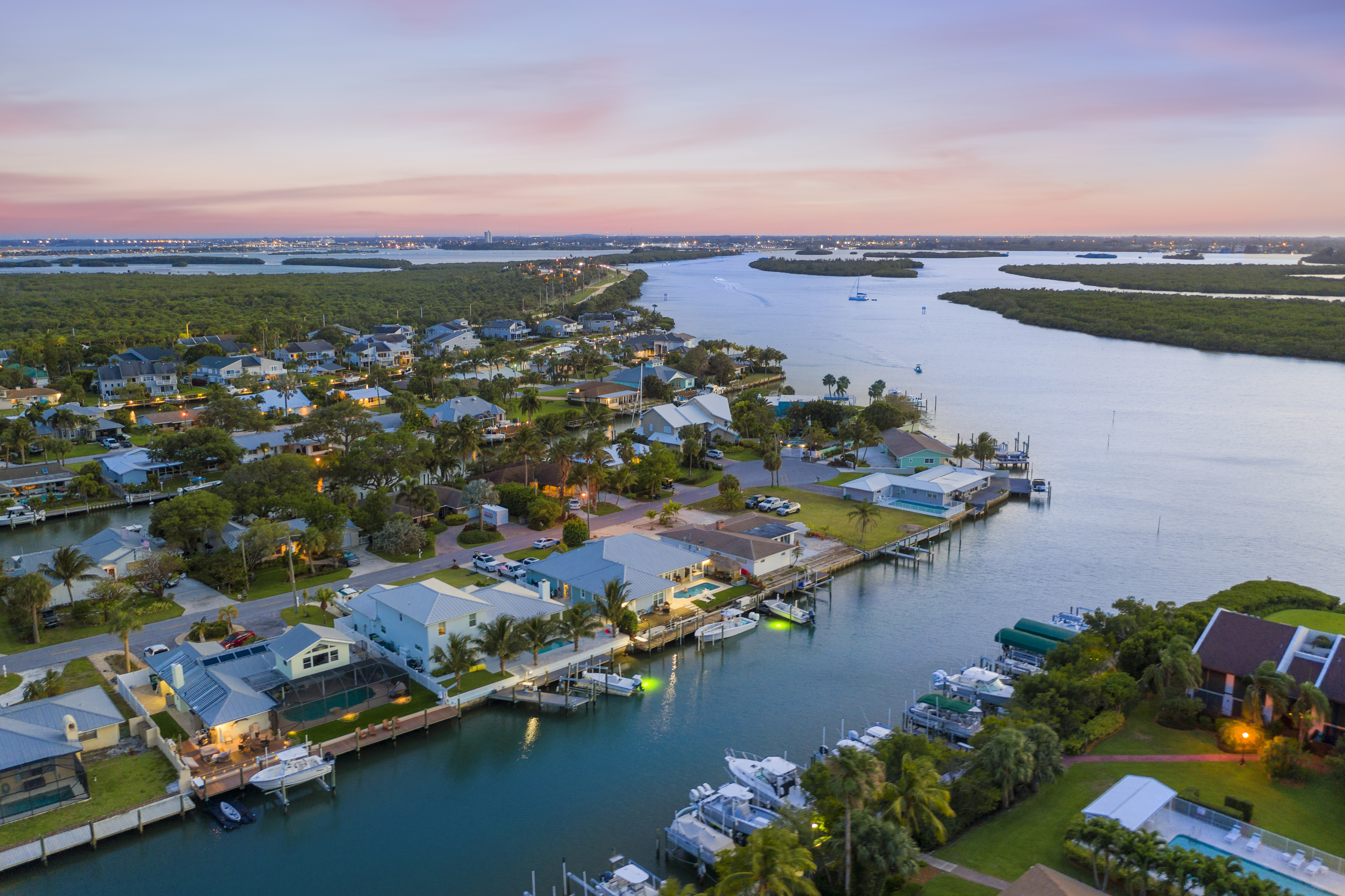
Flood zone designations vary across St. Lucie County. Many inland properties in Port St. Lucie and Tradition are in Zone X (minimal flood risk) and may not require flood insurance. Properties along the St. Lucie River, Indian River, canals, and on Hutchinson Island are often in higher-risk zones with higher premiums.
An elevation certificate, prepared by a licensed surveyor, documents the elevation of a structure relative to the Base Flood Elevation. It is the key document for accurate flood insurance quoting. For any waterfront or coastal purchase, get an elevation certificate during due diligence. Flood insurance premiums under FEMA's NFIP Risk Rating 2.0 are now tied directly to property-specific risk. Two houses in the same neighborhood can have very different insurance costs based on elevation and flood zone specifics.
Additional Exemptions That May Apply
- Veteran exemptions: Florida offers a range of property tax exemptions for veterans, from a partial exemption for service-connected disabilities to a full exemption for veterans with a total and permanent service-connected disability. Surviving spouses of qualifying veterans may also be eligible.
- Senior exemption (limited income): Homeowners 65 or older with household income below a specified threshold may qualify for an additional exemption of up to $50,000 on non-school levies in St. Lucie County, on top of the standard homestead exemption. Income limits and application requirements apply. Check with the Property Appraiser's office.
- First responder and teacher exemptions: Florida law provides an additional exemption for surviving spouses of first responders who die in the line of duty. Specific requirements apply.
Portability of the Save Our Homes Benefit
When you sell a Florida homestead and purchase a new Florida primary residence, you may be eligible to "port" your accumulated Save Our Homes benefit to your new property. Portability means carrying the difference between your old home's assessed value and its market value over to the new purchase. This can reduce the assessed value, and therefore taxes, on your new home.
This is valuable for buyers who have owned a Florida homestead for many years and have built up a large SOH benefit. A buyer selling a longtime South Florida homestead with a large gap between assessed and market value may be able to apply a portion of that savings to their new St. Lucie County property.
Portability must be applied for within three years of the date of sale of the prior homestead property. Consult the St. Lucie County Property Appraiser's office and a qualified tax professional for the specifics of your situation.
Ask Angela about tax-aware home search planning.
The full carrying cost of a home includes taxes, HOA, CDD fees, and insurance. Angela can help you compare properties on an equal basis.